1-Bromoheptane: A Deep Dive Into Its Role and Future in Chemistry
Historical Roots
Chemists have always looked for building blocks to spin up new molecules, and 1-bromoheptane, with its unassuming structure, has quietly played a steady part for decades. Back in the early 20th century, scientists learned how straightforward alkyl halides could be pressed into service for synthesis. 1-Bromoheptane, as a brominated n-alkane, stepped into laboratories at a time when the study of straight-chain molecules drove curiosity and ambition. Researchers discovered that swapping a hydrogen for a bromine near the end of a heptane chain opened doors to reliable nucleophilic substitution reactions, which unlocked further synthetic creativity. Over the decades, as organic chemistry matured and manufacturing demands grew, 1-bromoheptane became a steady presence in academic and industrial inventories, less flashy than other reagents but appreciated for doing its job without fuss.
Putting the Spotlight on 1-Bromoheptane
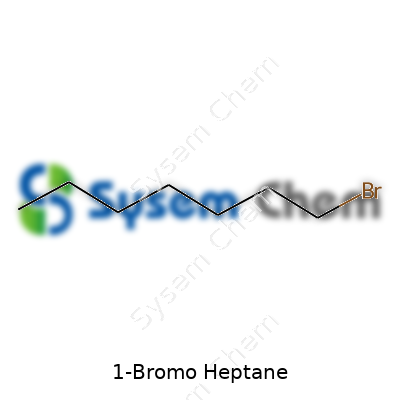
With a molecular formula of C7H15Br, this liquid sits somewhere in the middle of the alkyl bromide family. Straightforward to spot, it carries a single bromine atom at the end of its seven-carbon backbone. For those of us who worked at the bench, 1-bromoheptane often showed up as a faintly sweet-smelling, colorless liquid that blended science with a whiff of nostalgia—a nod to the long traditions of aliphatic chemistry and classic synthetic routes that refuse to bow out under pressure from fancier reagents.
Physical and Chemical Truths
Clarity in the bottle matters. 1-Bromoheptane boils at about 183°C, slides in under the radar with a melting point near -68°C, and hits a density close to 1.1 g/cm³. It doesn’t mix well with water, reflecting its nonpolar nature and nodding to bromine’s larger atomic size. In labs, its volatility demands respect, and storing it in tightly sealed glass keeps it from quietly evaporating away. Brominated alkanes don’t break or bend easily under sunlight or standard handling, but vigorous reactions with strong bases or nucleophiles turn this clear liquid into a handy springboard for further molecular changes.
Technical Details and Label Requirements
Every drum, bottle, or flask of 1-bromoheptane deserves a clear, honest label. Anyone picking up the container expects to see batch number, purity level—often above 98%—as well as date of manufacture and a chemical abstract service (CAS) number. Many safety data sheets lay out physical data, boiling and melting points, and handling precautions up front. Regulatory standards push for this transparency, especially as supply chains stretch across borders and end-users need assurance of product identity before risking valuable time or reagents on contaminated stock.
Making 1-Bromoheptane
Manufacturers have gotten pretty good at making alkyl bromides. The preparation of 1-bromoheptane usually involves treating 1-heptanol with hydrobromic acid, phosphorus tribromide, or a similar brominating agent. Safety goggles and gloves become non-negotiable, since these reactions can toss out noxious vapors or heat up unpredictably. For larger batches, continuous flow reactors provide a safer route that keeps the product pure and lets waste stream management become more systematic. Good ventilation and thoughtful solvent selection go a long way toward keeping things manageable in both research-scale and industrial settings.
What It Does in the Reaction Flask
A molecule like 1-bromoheptane rarely sits idle. Drop it into a flask with a strong nucleophile, and the bromine acts as a leaving group. You end up swapping the bromine for an amine, an alkoxide, or even a cyanide, depending on what you want to build. Organic chemists routinely use such tricks while reaching for longer-chain amines or ethers that aren’t so easy to source otherwise. In the world of Grignard reactions, 1-bromoheptane stands in as a precursor for synthesizing heptylmagnesium bromide, a tool for coupling larger frameworks or building pharmacophores with a predictable tail.
Synonyms and Aliases Across the Globe
Chemists don’t always use the same name. In one catalog, it’s called 1-bromoheptane; in others, n-heptane bromide or heptyl bromide surfaces instead. French, German, and Chinese texts toss their own spin on the name, but the backbone remains the same: a seven-carbon alkane with a bromine at the tip. Recognizing these synonyms avoids mix-ups, especially as research collaborations jump across continents thanks to digital catalogs and fast shipping.
Staying Safe: Handling and Regulation
Many remember stories from older mentors, cautioning against careless handling of haloalkanes. 1-Bromoheptane brings moderate toxicity and can irritate the skin, eyes, or lungs. Every bench carries gloves and splash goggles, and every student should get training before popping open a bottle. Fume hoods matter, not only for your own health but for keeping a lab environment bearable for everyone. Global chemical regulations, such as REACH and OSHA, enforce strict guidelines about storage, labeling, and permissible workplace exposures. Shipping 1-bromoheptane by air or sea triggers its own paperwork trail, with hazard diamond labels and customs checks reflecting the risk of spills or inhalation.
Stepping Out Into the World: Application Areas
As a synthetic intermediate, 1-bromoheptane rarely takes center stage, but its impact ripples out into pharmaceuticals, surfactants, and specialty materials. Medicinal chemists look to this molecule whenever a straight-chain “heptyl” group needs anchoring onto a larger scaffold. Surfactant designers rely on long-chain bromides while crafting cationic quaternary ammonium salts, targeting everything from disinfectant formulations to advanced polymers. A decade in industry taught me that production teams value materials with predictable reactivity, helping them chart a clear workflow from raw chemical to finished cationic surfactant or modified resin.
Pushing the Frontier: Research and Development
Research teams steadily look for greener, safer, or more selective ways to generate 1-bromoheptane. Some chase after new catalytic systems that swap out hazardous reagents. Others explore bio-based feedstocks, trying to trim the environmental impact from fossil-derived starting materials. In academic circles, chemists publish work on stereoselective substitution and radical chemistry, hoping to coax more control or diversity out of this one simple molecule. The supporting literature remains crowded with proposed modifications, patent filings, and new application areas, reflecting both the staying power and adaptability of these long-chain organobromides.
Weighing the Health Risks: Toxicology and Exposure
No one can ignore safety when chemicals enter the picture. Lab rats and cell lines help characterize the acute and chronic toxicity of 1-bromoheptane. Studies show it can cause skin and eye irritation and, if abused or spilled, can irritate airways. Long-term data remains patchier than one might like, driving regulatory authorities to err on the side of caution and enforce lower thresholds for chronic exposure. R&D teams keep pushing labs to substitute less hazardous materials wherever possible, recognizing that health and safety can’t play second fiddle to cost or convenience. Tracking environmental fate matters, too, as organobromines don’t always break down cleanly in our waterways or soil.
Looking Ahead: Where Might 1-Bromoheptane Go?
As industries focus on greener chemistry and demand for high-purity intermediates grows, 1-bromoheptane faces pressure to adapt. Manufacturing may turn away from traditional halogenation toward enzymatic approaches, or harness more recycled feedstocks. Meanwhile, innovations in pharmaceutical and polymer research may elevate demand for well-characterized, low-impurity alkyl bromides. Researchers aiming for safer chemical transformations will keep a close watch on substitutes and new reaction pathways, but a molecule with this much legacy and utility will likely hold its place for years as a practical workhorse—steadily evolving, but not disappearing, driven by both tradition and necessity.
Chemistry Behind the Scenes
1-Bromoheptane doesn’t quite roll off the tongue, and its name rarely pops up outside labs or the world of organic chemicals. At its core, this compound is an alkyl halide, built from a seven-carbon chain bonded with a single bromine atom. In a lab or a factory, clear liquids like these turn into workhorses for building bigger, more complex molecules. With the bromine atom tagging along, it opens doors for reactions that just wouldn’t happen otherwise.
Key Role in Synthesis
Some might glance over the bottle and see just another chemical. I’ve walked through facilities where workers in white coats rely on chemicals like 1-bromoheptane day in and day out. It finds its way into pharmaceuticals, making the backbone of drugs reliable and easy to tailor. Chemists use it as an intermediate. Picture it as a stepping-stone: reacting with other compounds, swapping out that bromine for something more useful. In research, swapping out one atom for another can unlock new properties or even help solve problems in disease treatment.
Everyday Goods Get a Boost
Manufacturers get creative with this compound. Perfumes and flavors benefit from molecules built using 1-bromoheptane. The fragrance you notice in a high-end cologne carries molecules that once started in the lab, shaped by this chemical. In the rubber and plastics industries, 1-bromoheptane steps in to modify or fine-tune products, improving flexibility and strength. These aren’t changes you see, but anyone grabbing a garden hose or stepping on a rubber mat reaps the benefit.
Research and Beyond
Academic labs use 1-bromoheptane to study new types of reactions, making it possible to produce molecules that just don’t occur in nature. This helps deepen our understanding of organic chemistry and sharpens drug development pipelines. Students and professors alike rely on reliable intermediates for hands-on learning, and this compound often makes an appearance in their workbenches.
Safety and Health Concerns
Chemicals play a double-edged role. Safety can get ignored in the rush to meet deadlines, but handling 1-bromoheptane takes care. Skin contact or breathing in vapors won’t do you any favors. Proper gear and ventilation keep chemists healthy. Inexperienced hands run a higher risk, with splashes causing irritation or triggering more serious health incidents. Regulations around storage and handling don’t just exist for paperwork—they keep people out of hospitals. Raised awareness and regular training can make a big difference.
Pursuing Greener Solutions
Environmental concerns matter more as production scales up. Old approaches led to spills and lingering residues, putting a strain on the local environment. Companies now look for safer disposal methods, like chemical recycling instead of dumping waste. Green chemistry offers routes to the same results with less impact. This matters to anyone who’s watched local water sources get contaminated or worried about long-term health effects in industrial areas. Sharing best practices between regions keeps these problems from repeating.
Looking Forward
Innovation keeps rolling forward. Newer research explores alternatives with less hazard or lower cost. Open discussions about chemical safety raise standards company-wide. People stay healthier, and the planet wins too. 1-Bromoheptane still fills a vital niche, but the industry keeps moving toward safer, smarter options.
What’s the Molecular Formula of 1-Bromoheptane?
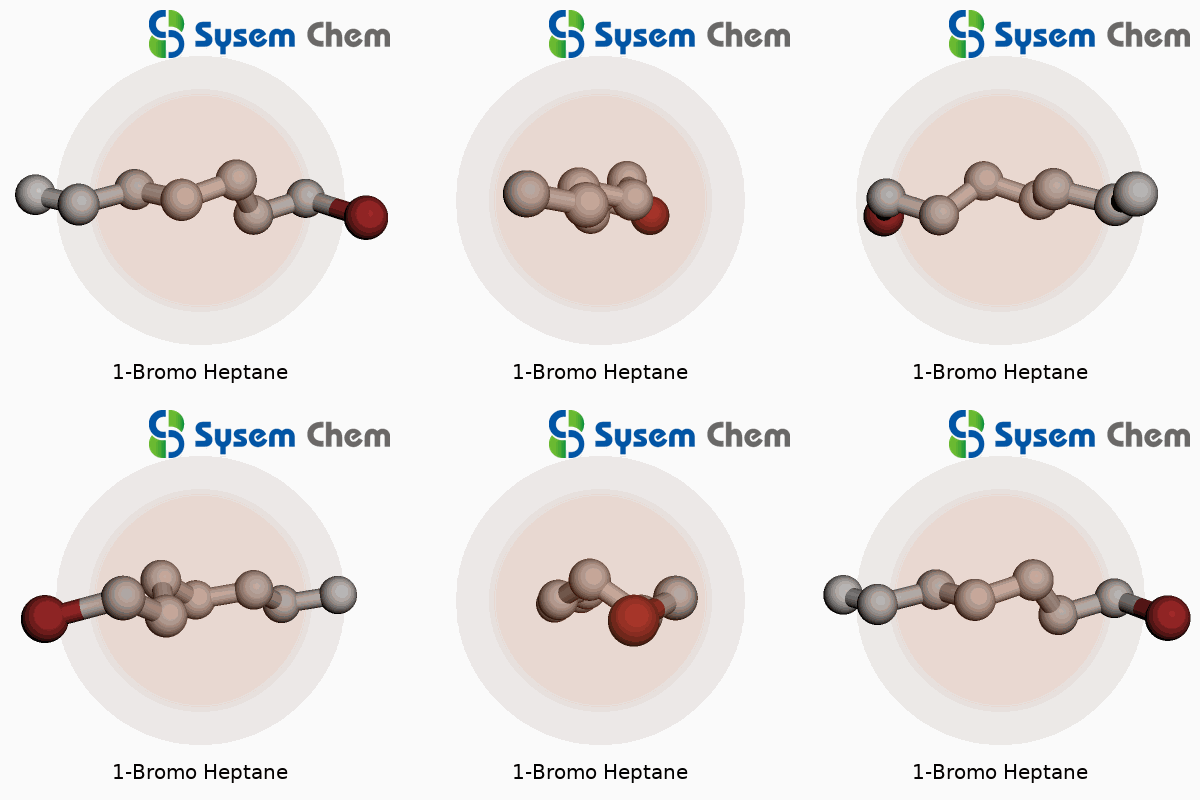
1-Bromoheptane keeps it simple: C7H15Br. That means seven carbons, fifteen hydrogens, and one bromine. The structure stretches out as an unbranched, straight-chain alkyl with a bromine atom sticking to the first carbon. Easy to write, but a lot sits inside those eleven atoms. Every molecule tells a story, and in the case of 1-bromoheptane, that story links basic organic chemistry to the wider world of synthesis and industry.
Molecular Weight: Getting Precise
Chemists spend a lot of time caring about molecular weights, especially for reliable reactions. 1-Bromoheptane clocks in at 179.10 g/mol. Break it down like this: carbon (C) is 12.01, hydrogen (H) is 1.008, and bromine (Br) is a heavy hitter at 79.904. I remember using this formula back in organic lab, standing awkwardly over a scale, determined not to mess up the calculations. Add them up: (7 x 12.01) + (15 x 1.008) + 79.904, and you hit the same number, every time. It’s a number pressed into the background of reactions, but it decides yields, costs, and how much risk is in the room.
Inside the Lab: How 1-Bromoheptane Shows Up
Back in undergraduate chemistry, the first time I smelled 1-bromoalkanes, I understood right away why labs need strong airflow. This compound is more than a classroom example; it appears regularly in pharmaceutical prep, agricultural chemicals, and surfactant research. Having a precise molecular weight keeps order in complex syntheses, where little mistakes spiral into big expenses. Miscalculate, and nothing lines up at the end—no excuses, no second takes.
Industrial Chemistry: More than a Number
In chemical manufacturing, margin for error tightens. If a process manager gets that molecular weight wrong, downstream batches slide off-spec, and clients notice. Years ago, a small error in weight data for a similar compound cost a company weeks of rework. With 1-bromoheptane, those seven carbons and heavy bromine wind up everywhere from anti-cancer research to specialty materials. For teams figuring out scale-up beyond the test tube, the right numbers mean smooth workflows and controllable residues.
Health, Safety, and Transparency
Anyone around specialty chemicals learns quickly: molecular formula links directly to safety. C7H15Br introduces a bromine atom, raising questions about toxicology, fires, and residues. Workers learn the specifics for protection: gloves, fume hoods, and storage protocols that trace back to that core formula and weight. It’s not just about what something is; it’s about how those facts shape risk, discovery, and regulation. Chemists and safety managers lean on reliable data—this is how trust gets built, one accurate detail after another.
Better Solutions Start with Clarity
Mislabeling a bottle or skipping a calculation opens the door to wasted resources and health hazards. Digitizing formula and weight info does more than speed up work; it makes compliance smoother and waste lower. Some companies now automate formula checks right at the source. These kinds of practical changes mean safer warehouses and more consistent research, especially when working with compounds like 1-bromoheptane. With so many industries relying on baseline chemical data, accuracy strengthens the bridge from lab bench science to global markets.
Understanding the Risks
1-Bromo Heptane stands as one of those industrial chemicals that don’t often get a lot of spotlight, but they play an important part in the background of manufacturing and labs. This is one substance where proper storage isn’t just a formality — it’s about keeping people, property, and processes safe.
Recognizing the Hazards
I’ve worked around enough chemicals to know the dangers of underestimating volatility. 1-Bromo Heptane brings its own blend of risks. It's a flammable liquid. Vapors travel, settle in low areas, and can ignite far away from their source. Spills leave a lingering, sharp odor that clings to skin and clothing. In the event of a leak, exposure can cause headaches, dizziness, or worse. I’ve seen more than one experienced operator caught off guard by just a few drops on the workbench. This isn’t the kind of material to leave on a shelf in a sunny room or next to an open heat source.
Try This for Containment
Sturdy containers, tightly sealed and clearly labeled, keep things safer. The standard is glass or high-density polyethylene bottles: materials that show real resistance to the chemical’s strength. I’ve learned that improvising with old solvent cans or makeshift lids just invites disaster, so do yourself a favor and use approved containers, even when budgets are tight. Always check those caps — a brittle or cracked seal lets vapors escape before anyone notices.
Cool, Dark, and Dry
Heat and light push 1-Bromo Heptane in the wrong direction. A storage room that never climbs above room temperature helps limit pressure build-up inside the bottles. UV rays can degrade containers and slow-release nasty byproducts. In practice, I always gravitate towards interior cabinets, away from windows and radiators, because that’s where temperature stays most stable. Humidity brings its own headaches. Dampness causes labels to peel — next thing you know, there’s an unmarked bottle and nobody’s sure what’s inside. A dry, ventilated area gives everyone peace of mind.
Ventilation and Location
Any place storing volatile chemicals like this deserves real ventilation, not just a cracked window in the corner. Many labs install local exhaust fans or flammable safety cabinets with built-in vents. Indoors, I always recommend keeping chemicals in cabinets made for flammables, well away from direct work areas. Never store large quantities near exits, electrical panels, or where workers eat lunch. Even small bottles can be a headache near ignition sources.
Labeling, Access, and Routine Checks
Clear, legible labels matter as much as the actual bottle. Use chemical-resistant pens and reinforce with extra tape if needed — sweat, chemicals, or cleaning supplies will erase ordinary marker in no time. Limiting access to trained staff keeps novices from mishandling bottles or moving them carelessly. Routine inspections save more than I can count; one loose cap or weeping seam, caught early, prevents a mess. Written logs and a visual check every week make it simple to stay on track.
Disposal and Emergency Steps
Even with all precautions, accidents happen. Spill kits belong close by, stocked with absorbents and proper protective gear. Every person in the area should know evacuation routes and the details of emergency procedures. Disposal isn’t about dumping down a drain or tossing a bottle in the trash — reputable chemical waste handlers know how to neutralize and handle 1-Bromo Heptane as regulations require. If there’s doubt, err on the side of safety. Over the years, I’ve found that consistent training and clear guidelines build habits that keep everyone in one piece.
Recognizing Real Hazards in the Lab
People working with 1-Bromo Heptane notice its sharp odor first. It clings to your hands and clothes if you come into contact with it unprotected. Many halogenated organics irritate skin and eyes, but this substance ramps it up, risking real burns and long-lasting irritation. After seeing a coworker develop a red, raw patch from a splash, the importance of solid personal protective equipment never escapes you.
Personal Protective Equipment: Not Just an Afterthought
Every time someone uses 1-Bromo Heptane, gloves made from nitrile or butyl rubber feel non-negotiable. Lab coats with tight cuffs shield your arms, and safety goggles block sneaky splashes from finding your eyes. Respirator masks come out if ventilation isn’t perfect. Fume hoods run full blast in college teaching labs, and the old vents pulled a surprisingly large amount of vapor away. Even a quick whiff can cause burning in the nose and throat, so nobody skips the proper setup.
Ventilation: Open Windows Don’t Cut It
1-Bromo Heptane releases vapors that linger, especially in stuffy rooms. People setting up experiments work inside fume hoods—no shortcuts. Good airflow isn’t just a comfort—it stops headaches, dizziness, and even worse neurological symptoms down the line. Relying on open windows or table fans doesn't do enough. Modern workspaces make sure extraction is up to code because students, new hires, and long-timers deserve a setting that doesn’t gamble with health.
Dealing with Spills: Speed Matters
Quick responses become second nature after a few accidents. Small spills get absorbed immediately with specialized pads, not paper towels, because reactivity and volatility don’t mix with the trash can. Larger spills call for team action: evacuate the area, let trained staff handle cleanup kits, never touch spill stations with bare hands. Labels and posted reminders push everyone to act right, even in panic.
Safe Storage: Lock and Segregate
Storing 1-Bromo Heptane with acids or oxidizers courts disaster. Sturdy cabinets, proper labeling, and a locked door mean you won’t wake up for a 2 a.m. fire alarm. Some folks overlook this and pile new deliveries anywhere space opens up—bad habits like that catch up fast. Organized logs of chemical inventories discourage mistakes and cut down confusion, especially in places where supplies change hands across shifts.
First Aid for Exposure
People exposed to 1-Bromo Heptane need real first aid, not just a rinse. Eyes go straight to eyewash stations for at least 15 minutes. If it touches skin or clothing, strip contaminated clothes and shower thoroughly. Inhaling the vapor means moving to fresh air—don’t wait to see if symptoms fade, seek medical help once the exposed person is safe. Training sessions that drill these responses make a huge difference in what happens after a bad moment.
Training and Accountability
Regular training gets everyone to respect the risks. After seeing a careless peer almost spark a fire, you value drills and spot checks a lot more. Refresher courses cover material safety data sheets and hands-on use of spill kits. Supervisors talk openly about near misses and real incidents because hiding mistakes only leads to repeat accidents. Signs posted near storage cabinets and fume hoods act as reminders. Responsibility sticks to groups, not just individuals; everyone watches each other’s back.
Better Systems for Fewer Accidents
Digital tracking of chemical use reduces errors. Automatic reminders flag expiring stock or improper storage. Some labs move towards closed-system handling equipment to minimize exposure. Label printers right at the storage area prevent confusion, especially in busy periods. Support from management matters too—budgets for safety gear and equipment upgrades can’t be trimmed when risk comes into play. Choosing prevention keeps more people healthy and more labs productive.
Water and 1-Bromo Heptane: Why Mixing Gets Awkward
Let’s keep it simple. Pour 1-bromo heptane into a beaker with water and you’ll spot two layers. The water stays at the bottom, and the bromo compound floats to the top. Anyone who’s tried to wash grease off their hands knows: oil and water don’t play nice together. The same story unfolds with 1-bromo heptane. It’s got a long chain of seven carbon atoms—plenty of room for hydrophobic behavior. That means water, famous for bonding only with certain molecules, wants no part of it.
Understanding the Science
Organic chemistry shows us plenty of examples like this. 1-Bromo heptane is what chemists call a nonpolar molecule (apart from the slightly polar bromine atom tucked onto one end). Water, by contrast, stays polar through and through. Think of water molecules clinging together by hydrogen bonds, while the bromo heptane molecules prefer to huddle in their own group. The term “like dissolves like” sums it up better than any textbook. Water’s not about to reach out and mingle with something this nonpolar.
The data backs this up. Solubility charts list 1-bromo heptane as practically insoluble in water, showing solubility values that are close to zero. If you’ve taken a chemistry lab, maybe you’ve seen tests like the shake test, where shaking a test tube with equal amounts of each liquid just leads to rapid separation. No matter how much you shake, nothing much dissolves. The reasons aren’t magic—water molecules hang onto each other too tightly, refusing to trade partners for something with hardly any charge or hydrogen bonding potential.
Why It Matters
Why do we care about this? The line between “soluble” and “insoluble” has big impacts on everything from industry to environmental clean-ups. Imagine a chemical spill with a substance like this one. Water won’t carry it away or break it down. It floats, spreads, and resists simple washing. Years ago, I did some work at a site with oil contamination. The contaminated water and oily layer would split—almost looking pretty, until you realized nothing was getting fixed by flushing water over it. It took special surfactants or a mechanical scoop to gather up the oil. The same headache would show up with 1-bromo heptane spills.
What to Do About It
Finding ways to handle barely soluble chemicals demands more thought. If you’re dealing with 1-bromo heptane in a lab or a factory, you can’t just rinse everything down the drain. Specialized cleaning agents—surfactants—come in handy, surrounding each molecule and helping it mingle with water, long enough to wash away. At scale, industries have to invest in proper containment, collection systems, and solvent recycling equipment. Some communities press for stricter regulations around these compounds, aiming to keep them out of waterways in the first place.
Looking at lab and real-world situations, the story stays the same. The inherent nonpolarity of molecules like 1-bromo heptane makes them lousy teammates with water. Whether you’re planning a chemical process, running a facility, or working in hazardous waste cleanup, understanding this kind of basic solubility is key to keeping people and the environment safe.