1-Bromotetradecane: A Close Look at Its Journey, Science, and Uses
Historical Development
Chemists back in the late nineteenth century were obsessed with unlocking ways to transform ordinary alkanes into more useful building blocks for synthesis. The story of 1-Bromotetradecane grew out of those early efforts, with laboratories eager to open up new chains by swapping a hydrogen atom for a halogen. Tetradecane itself, known for its straightforward hydrocarbon structure, met bromine on the benches of those early pioneers. By the time World War II stoked demands for specialty intermediates, manufacturers looked for ways to scale up the transformation of long-chain alkanes into functionalized products that had specific industrial roles. Over the decades, as organic chemistry advanced, so did methods for selectively introducing bromine to the end of a long chain, refining processes to get a cleaner product with fewer by-products. Today, 1-Bromotetradecane stands as a product of practical need and the slow, stubborn improvement of synthetic chemistry.
Product Overview
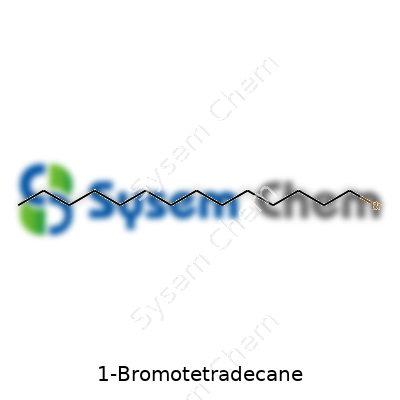
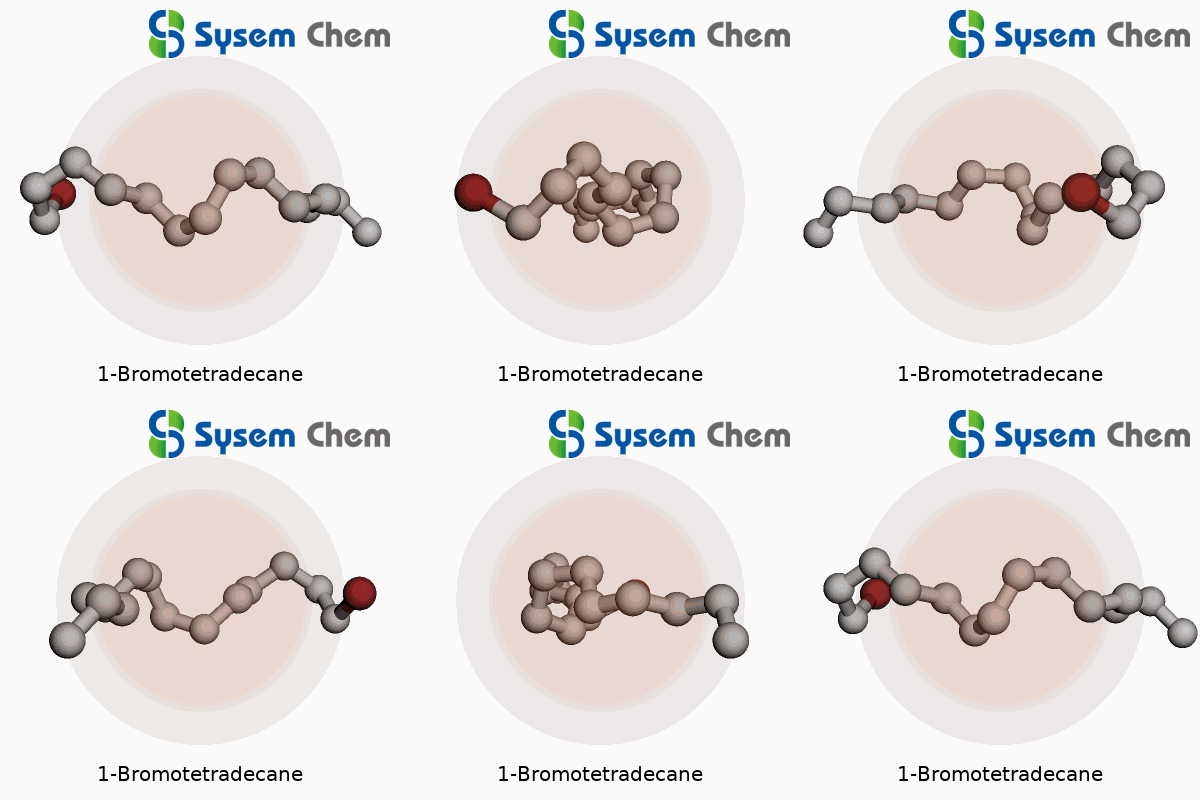
1-Bromotetradecane is an alkyl halide, a molecule built from a fourteen-carbon straight chain capped at one end with a bromine atom. Its main appeal comes from that bromine, positioned so it can be swapped out for something more elaborate during chemical synthesis. Industries treat this compound as a tool—a key step in crafting new surfactants, specialty lubricants, or pharmaceutical intermediates. It carries a faint, oily odor and flows as a colorless to pale yellow liquid, easy enough to handle with the right training. The utility of 1-Bromotetradecane reaches far into chemical manufacturing, touching everything from advanced materials research to agricultural formulations.
Physical & Chemical Properties
With a molecular weight of 293.30 g/mol and a formula of C14H29Br, 1-Bromotetradecane looks and behaves much like other heavy alkyl bromides. It remains stable at room temperature if kept away from strong acids or bases. Its boiling point sits close to 305°C, and it solidifies just below room temperature, which makes shipping during cold weather a challenge. The compound’s moderate density and limited solubility in water echo traits found across similar long-chain organobromides. Because it’s flammable, storage near ignition sources can spell trouble. The bromine atom—slightly reactive but not explosively so—makes this molecule valuable in synthesis. In my own lab work, we’ve always relied on its predictable reactivity, knowing that the bromide leaves cleanly under the right conditions without clouding a reaction with mysterious side products.
Technical Specifications & Labeling
Producers outline standards to keep the material fit for purpose. High purity, generally above 98%, matters most since trace impurities can derail delicate syntheses downstream. Labels typically note batch number, purity, and handling precautions. For shipping, drums or glass bottles get flame-resistant packaging. Storage guidelines flag away from sunlight and heat, and regulations often require clear hazard symbols for flammable material and skin irritant. If you’re buying for laboratory use, manufacturers issue a certificate of analysis so users can double-check quality before breaking the seal. I’ve always respected suppliers who keep these details front and center, since a single mislabeled drum can mean days of wasted effort.
Preparation Method
The most straightforward method starts with tetradecanol or tetradecane. In the lab, chemists often prefer the alcohol, using reagents like phosphorus tribromide (PBr3) or hydrobromic acid to replace the OH group with bromine. This reaction can be done in glassware with decent ventilation, as both PBr3 and HBr can irritate eyes and lungs. For industrial scale, free-radical bromination of tetradecane provides a continuous stream of product, but managing side reactions—where bromine attacks elsewhere on the chain—requires careful control of temperature and UV light exposure. Regardless of approach, purification by distillation or recrystallization is mandatory. The final product gets checked for residual reagents, with strict limits in place on phosphorus or unreacted alcohol. Waste management looms over this process, as leftover reagents and by-products can be tricky to neutralize safely.
Chemical Reactions & Modifications
The single bromine atom at the end of 1-Bromotetradecane plays a giant role in why this molecule attracts so much attention. Nucleophiles attack the carbon bearing the bromine, swapping in new groups—a trick used to introduce everything from amines to thiols. This property lets formulators stitch together larger molecules for use in detergents, lubricants, and even polymer additives. In organic synthesis courses, instructors use reactions with sodium cyanide or potassium azide to illustrate substitution chemistry, showing how easy it can be to pivot from a haloalkane to something more complex. Reductive coupling, elimination, and even cross-coupling with metals like palladium round out the list. If careful about stoichiometry and temperature, unwanted side-products stay low, but overzealous heating can break the chain or generate toxic brominated by-products.
Synonyms & Product Names
1-Bromotetradecane adopts a few other names, especially in supplier catalogs or older journal articles. You might find it under n-Tetradecyl bromide, Tetradecyl bromide, or 1-Tetradecyl bromide. Chemists sometimes describe it using systematic IUPAC naming conventions as 1-bromotetradecane. The CAS number 112-71-0 links all these names for searches across safety databases, product monographs, and environmental records. Each synonym points to the same fourteen-carbon brominated chain, so clarity in labeling always helps avoid confusion during ordering or regulatory reporting.
Safety & Operational Standards
Handling 1-Bromotetradecane does not require extreme measures, but safety data sheets stress gloves, goggles, and ventilation. The bromine atom imparts moderate toxicity to skin and lungs, with prolonged exposure leading to irritation or burns. Standard lab practice involves working under a fume hood and double-checking that containers are tightly capped. For spill control, sand or inert absorbent works best, and waste gets tagged for halogenated organic collection. In shipping, containers must carry UN numbers for flammable liquids, and customs paperwork tracks each shipment tightly to avoid loss or mislabeling. My years in industrial settings taught me that a single careless moment—a broken bottle, a distracted transfer—can lead to headaches not only for health but also for environmental compliance.
Application Area
Industries draw on 1-Bromotetradecane for the ability to anchor or extend other chemical functionalities along a carbon chain. Surfactant creators use it as a starting material for building tailored molecules that lower surface tension in detergents and emulsifiers. Lubricant makers tweak its structure to generate slippery materials for metalworking or machinery. In pharmaceuticals, the bromide group gets swapped out for something biologically active in multi-step syntheses. Agrochemical labs often use this compound to construct molecules that carry active ingredients into waxy plant leaves. Environmental research sometimes focuses on its fate and breakdown products, seeing it as a stand-in for long-chain brominated substances found in marine samples. From the bench to the shop floor, 1-Bromotetradecane leaves a wide chemical footprint.
Research & Development
Scientists push forward with improvements in the safest, most efficient production routes for 1-Bromotetradecane. Catalytic processes that cut down waste draw heavy funding. Green chemistry research aims to swap hazardous reagents for milder, more environmentally friendly options. New derivatives designed for biodegradable surfactants or medicine delivery systems begin with modifications at that alpha-bromine position. There’s ongoing work to tailor carbon chain length and branching for enhanced physical properties. In academic circles, this molecule serves as a template for teaching advanced synthetic routes and exploring reaction optimization. In my experience, student researchers gravitate to 1-Bromotetradecane for learning skills that they carry into careers across pharmaceuticals, polymers, and specialty chemicals.
Toxicity Research
Toxicologists have long flagged organobromine compounds for scrutiny. While 1-Bromotetradecane doesn’t bioaccumulate as aggressively as polybrominated diphenyl ethers, exposure can still harm aquatic life. Extended release into waterways sees the carbon-bromine bond break and set free smaller, sometimes more reactive species. Animal studies highlight mild skin and respiratory irritation, and regulatory agencies in Europe and North America call for careful limits in the workplace. Personal safety measures matter, and company health protocols routinely require annual reviews of air and surface contamination in chemical plants. Waste incinerators struggle with halogenated streams like these, so research into advanced breakdown—and even microorganism-assisted degradation—keeps moving. As someone who has managed waste compliance, the challenge never ends and the push for safer alternatives remains steady.
Future Prospects
1-Bromotetradecane stands at the intersection of established chemistry and new technology. Demand for specialized surfactants, greener solvents, and advanced lubricants keeps this molecule in play, but sustainability pressures keep pushing for less hazardous production practices. Chemists map out bio-based routes using renewable feedstocks to replace fossil-derived starting materials. Startups develop catalysts that minimize energy costs, and regulators watch for safer profiles across the whole product lifecycle. In the decades to come, whether as a key intermediate in biodegradable surfactants or a platform for novel drug delivery vectors, users will keep looking for ways to stretch its chemistry while shrinking its footprint. In all of this, scientists, engineers, and regulatory experts must keep close tabs on research, safety, and the changing needs of a cleaner, more responsible industry.
A Closer Look at 1-Bromotetradecane
I remember my earliest days in the chemistry lab; you'd walk along aisles filled with bottles carrying long, complicated names. You start picking out the patterns. Take 1-Bromotetradecane, for instance. The formula, C14H29Br, might look like a jumble to some, but behind those characters lies a careful order.
Every individual who’s worked with organic molecules notices the pattern—tetradecane tells you there are fourteen carbons in a straight line. Swap out one hydrogen for a bromine, and you get 1-bromo, which means the bromine sits at carbon number one. That strategic placement changes how the molecule interacts with other chemicals and even surfaces. Chemists and engineers pay close attention to this because it determines how well the substance serves as a building block in industry or research. Getting the structure right can mean the difference between a successful reaction and wasted time and money.
Why the Formula Matters in Daily Life
Chemistry doesn’t only stay in the lab. The chemicals in shampoo, cleaners, or fuel additives depend on chains similar to 1-Bromotetradecane. That brominated carbon chain finds its way into surfactants, sometimes in testing lubricants or synthesizing more complicated forms of matter. Accuracy matters. If one writes C14H29Br, the count tells not only what’s in the flask but also what to expect if the material lands on skin or mixes with water. Regulatory bodies and safety data sheets require these details to help workers and consumers understand potential hazards.
Learning about chemical formulas makes it clear how one wrong number might signal a totally different compound. The safety protocols, environmental fate, and risks change along with the substance. That’s one reason, in any scientific field, folks double-check their notes before starting a reaction or mixing things together. A misplaced bromine can turn a simple experiment into an emergency.
Safety, Environmental Concerns, and Moving Forward
Handling 1-Bromotetradecane brings up another issue—responsibility. The heavier halogens, like bromine, often raise eyebrows for their impact on both health and ecosystems. Students in chemistry learn pretty early on that brominated compounds can stick around in the environment. They’re not as persistent as some others, but precaution never hurts. Industry leaders already look for greener alternatives, both to follow regulations and because the public increasingly expects ethical choices about what’s released into the world.
The conversation about safety includes clear labeling, protective equipment, and proper disposal. Take brominated compounds outside the lab; regulators demand clear tracking from transport to waste management. Chemists must keep learning, stay up to date with best practices, and question even familiar procedures. That approach protects both their own health and their team’s, reducing risks and unplanned costs.
The Value of Getting It Right
In my experience, sharing the precise formula—C14H29Br—isn’t about memorization. It supports a culture of accuracy and transparency. Any person joining a research group or chemical company quickly sees that one mix-up might delay a whole project or put people at risk. Whether using it to create a new compound or auditing material lists for safety, getting the formula right also means showing respect for colleagues, consumers, and the community. In the end, no lab or classroom should ever downplay these details because they shape every outcome.
Understanding 1-Bromotetradecane
Anyone who has spent time in a laboratory knows specialty chemicals don’t get much attention outside chemist circles. 1-Bromotetradecane is one of these forgotten workhorses—clear, oily, doesn’t come with any drama, but it sure matters for those who rely on it. With fourteen carbons and a single bromine atom hanging off the end, it’s not winning any beauty contests, but its chain length and structure do a lot of heavy lifting in chemistry labs and factories.
Key Roles in Synthesis
One area where 1-bromotetradecane shines is in the making of other compounds. Organic chemists use it as an alkylating agent, especially for introducing long hydrocarbon tails into molecules. This process features heavily in the creation of surfactants, where the hydrophobic chain lets the molecule find its place at an oil-water interface. These surfactants eventually end up in detergents, emulsifiers, and dispersants—the stuff that makes everyday products work better. In my own projects cutting molecules apart and putting them back together, I’ve run into brominated alkanes like this one any time I wanted to stick a long tail onto something to change its solubility or bulk up a reaction intermediate.
Supporting Advanced Material Science
Modern electronics, especially things like organic light-emitting diodes (OLEDs) and advanced lubricants, count on specialized chemicals as building blocks. 1-Bromotetradecane often forms part of trial syntheses for liquid crystals. Liquid crystal displays take advantage of the molecule’s long, flexible backbone, which helps form organized phases at room temperature. Research groups looking to tweak properties such as melting point or conductivity gravitate toward these kinds of intermediates. It’s easy to write off chemicals like this as anonymous “feedstocks,” but every high-tech gadget in your pocket owes something to this sort of behind-the-scenes work.
Pharmaceutical and Biochemical Research
Drug development sometimes involves tweaking molecular properties to improve everything from bioavailability to shelf life. A good example is modifying peptides and other small molecules by adding alkyl chains to alter how they move through a cell membrane. 1-Bromotetradecane, like its shorter cousins, can step into that role, with its length offering the right balance of hydrophobicity and flexibility. In my own research experience, watching a simple change in chain length turn a flop into a hit in lab tests reminded me these details have major impacts.
Environmental and Health Awareness
Handling any brominated compound means thinking about safety and environmental impact. Organizations like OSHA and the ECHA keep a close eye on workplace exposure to halogenated hydrocarbons. While 1-bromotetradecane does not have an especially nasty reputation compared to some short-chain halides, anyone who works with it knows proper gloves, goggles, and ventilation are basics. Waste management practices in reputable labs follow guidelines to keep bromine-containing byproducts out of the water stream—a lesson reinforced by decades of real-world experience and research into persistent organic pollutants.
Making Supply More Sustainable
As conversations about sustainability pick up speed, chemical suppliers and manufacturers feel the pressure to track and minimize production impact. This means switching to greener synthesis routes, exploring bio-based alternatives where possible, and updating documentation to keep up with REACH and TSCA regulations. I’ve seen some labs trial the use of alcohol precursors from renewable resources, and some creative thinking on reusing waste solvents pays off for both the bottom line and the planet.
Understanding the Chemical
1-Bromotetradecane, a clear organic compound, can seem harmless sitting on a shelf. In many labs, it appears on inventory lists simply as a routine reagent. The truth is, the risks connected to this chemical shouldn’t be ignored. Its brominated structure means it can cause irritation, and improper contact may lead to more serious health effects.
Personal Protective Gear Comes First
Anyone who works with organic bromides develops a healthy respect for gloves and goggles. Splashing—even a couple drops—onto the skin can bring on redness or a rash. Accidental hand-to-face contact often leads to eye burning, watery eyes, or worse. Nitrile gloves hold up well against this type of chemical, and I always choose safety glasses with side shields. In busy workspaces, a lab coat with snaps—not buttons—offers quick removal if there’s a spill. Closed shoes keep feet out of harm’s way.
Ventilation and Air Quality
The air inside most chemistry labs gets special attention. I learned early on to trust the fume hood whenever working with this compound. 1-Bromotetradecane doesn’t have a strong smell, but vapors can enter the lungs without warning. Fume hoods help by pulling harmful vapors out before anyone breathes them in. Never open the bottle on a regular benchtop; tiny airborne droplets can settle onto skin or eyes so quickly. Air monitors in the lab flag any increase in concentration, which helps keep everyone honest about using the right engineering controls.
Spill Clean-Up Matters
Minor spills happen, even with the greatest care. Rapid response limits damage. I once saw a careless transfer lead to an overturned vial and a slick spot the size of a postcard. We covered it with activated charcoal absorbent, waiting long enough for a full soak. Standard paper towels or rags won’t do—the chemical can seep through, increasing skin exposure. After disposal in a sealed container (never in the regular trash), the site got a detergent scrub and a rinse. Hands, arms, and wrists go straight to the sink after handling, every time.
Storage and Labeling
All chemicals share fridge shelf space in the chemistry stockroom, so clear labeling stops confusion. 1-Bromotetradecane needs a sturdy amber vial, with the cap tightly screwed down. Never store it near acids or oxidizing agents. Flammable storage cabinets keep bottles cool and secure. I avoid transferring larger quantities than needed for a single experiment; keeping the bulk separate means less risk in case of accidents.
Training and Protocols
Working with risky chemicals demands more than common sense. I make a point of training anyone new to the lab, regardless of prior experience. The Material Safety Data Sheet (MSDS) offers details about symptoms and first aid responses. Quick access to an eyewash station and emergency shower always comes up in training. In one case, the difference between a minor irritation and a hospital trip was just knowing to rinse immediately and for long enough.
Disposal Keeps Communities Safe
Disposing of brominated compounds properly stops trouble before it starts. It goes straight to hazardous waste collection, never down the sink. Containers get clear labels and a log of what’s inside. City rules call for regular pickups, keeping staff and communities far away from any chance of harm. I’ve seen what complacency leads to—neighbors calling in complaints, surprise audits, and major lab setbacks.
Building Safer Habits
Safe handling of 1-Bromotetradecane relies on habits anyone can build. With consistent training, personal protective gear, smart storage, and a little vigilance during experiments and cleanup, labs stay less risky. Investing in a few extra minutes matters, and helps everyone go home healthy.
Looking Past the Label: What We Really Handle
Many of us glance at a chemical label and see a string of long words, maybe shrugging because, outside of a lab, these liquids rarely show up in daily life. I remember working with organic compounds in a university lab and realizing early on that safety didn’t start with hazard symbols — it started with storage. Chemicals like 1-Bromotetradecane highlight that lesson for anyone in a lab, warehouse, or chemical supply chain.
Why Does Storage Matter?
1-Bromotetradecane doesn’t make headlines often, but it does create risks you don’t see coming. As a long-chain alkyl halide, it joins a category of substances that are more stubborn than fiery; slow leaks, vapor fumes, and long shelf lives turn into hidden threats. Case in point: Several storage rooms in industrial settings have suffered after someone stored halogenated organics under the wrong conditions. Within weeks, fumes built up, damaging more than just the sense of smell.
Storing this chemical in a cool, dry spot isn’t about following boring protocol. Moisture encourages hydrolysis, which sneaks up without a loud warning. Heat speeds decomposition. In a poorly ventilated room, vapors concentrate and create hazards to lungs or even ignite in rare scenarios. These are not theoretical dangers. I've seen the inside of a fume hood after only an hour of improper storage — the smell lingers, and the cleanup costs money and time.
Practical Steps for Storing 1-Bromotetradecane
A well-run lab or warehouse never trusts an uncapped bottle or a dusty shelf. The best practice starts with containers made of materials that don’t react — glass with a tight seal stands out, while plastic can sometimes soften or corrode. Labels shouldn’t fade into the background either. Clear, prominent tags help a lot during routine checks, especially when staff turn over.
On the ground, organize the storage area away from strong oxidizers and acids. Even an accidental shelf mix-up risks a chemical reaction. Poor housekeeping multiplies the chance of spills, so keep everything off the floor, away from walkways, and under local exhaust ventilation. Debris and clutter create trip hazards and complicate emergencies. Never forget that temperature matters, too. Aim for a consistent, moderate climate—around room temperature, since both hot and cold swings weaken the container and the chemical itself.
I’ve watched people stash extra stock behind other bottles “temporarily,” only to forget them for months. A routine inspection schedule—actual pen-and-paper checklists—forces accountability. Every time someone checks the inventory, they spot damaged containers or out-of-date supplies. My old supervisor kept a logbook on the door; it cut unexpected problems by half.
Regulatory Responsibility and Environmental Care
Regulations expect secure, documented storage. This isn't just to avoid fines. Failing to keep chemicals locked up threatens staff, janitors, and anyone else who might wander into the wrong room. The EPA, OSHA, and similar agencies all reference proper chemical storage for good reason. Mishandling halogenated compounds can pollute air and water if somebody dumps them down the drain or fails to contain a spill.
Chemical stewardship means treating even seldom-used materials with respect. Choosing dedicated, labeled cabinets, inspecting often, and closely following local rules save people, property, and the planet from avoidable harm. No chemical, including 1-Bromotetradecane, should ever sit forgotten just because it seems stable on the outside.
Why Purity Levels Matter in Everyday Lab Work
Every chemist or process engineer knows that even tiny impurities in a chemical can derail an experiment or ruin a production run. 1-Bromotetradecane, an organic compound often used in surfactant research, synthesis of specialty chemicals, and as an intermediate in pharmaceuticals, is no exception. Lab teams trust suppliers to provide material at the purity they ask for because each percent, or even each fraction of a percent, makes a difference. In my experience, slipping from 98% purity to 95% may sound minor, but that extra impurity sometimes triggers side reactions, creates new unknowns in the product, or simply spoils the outcome completely.
Commonly Offered Purity Grades
On the market, you’ll usually find 1-Bromotetradecane offered at 97% to 99% purity, with high-end suppliers advertising levels at or above 99%. Lower-purity materials sometimes show up, too, targeted to industries less sensitive to minor impurities. That said, most R&D teams and production chemists reach for the highest purity available within budget. End-users in electronics, fine chemicals, and pharmaceutical intermediates often refuse anything under 99%. There’s a level of trust in these numbers—based on gas chromatography, NMR, and sometimes headspace analysis. A buyer with any experience will review the supplier’s Certificate of Analysis to check for water, halide byproducts, or other stuck-on contaminants.
The Impact of Impurities in the Real World
People sometimes overlook just how many headaches can come from marginally dirty chemicals. I’ve seen the dashboard light up with failed reactions, fouled reactors, drops in product yields, or tainted smells when the batch-grade stuff tries to stand in for the high-purity version. In one industrial setup I witnessed, switching to a “cheaper” grade meant hours of troubleshooting equipment blockages and expensive downtime—all thanks to a sliver of leftover reactants in the raw material.
What Drives the Variability in Grades?
Producers tune their processes to hit higher purities using extra distillation or more rigorous purification steps. That means more time and higher energy costs, so top grades come with a price premium. Lab users pay it for peace of mind and cleaner reactions. Sourcing teams often balance budget pressures against the real risk of failed syntheses. Some companies, including a few I’ve worked with, run their own incoming quality checks and send back anything that doesn’t align with the purity promised.
Improving Confidence in Sourcing
If you’re a buyer, look beyond the percentage number and check the full impurity profile. Evaluate the supplier’s testing methods. Trustworthy suppliers share batch-specific data, not just generic spec sheets. Some large organizations set up partnerships with suppliers so they can audit quality systems and discuss upcoming process changes. In smaller labs, building a relationship with the vendor rep gives more leverage if a shipment turns out to be below spec.
How Labs Can Work Around Purity Issues
Some research teams purify critical chemicals in-house, especially on small scales or for early-phase work. This adds labor but sometimes pays off with better data and less troubleshooting later. Cross-checking batches before use, and holding suppliers accountable for every lot, helps keep experiments consistent and prevents surprises when scaling up.